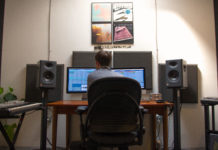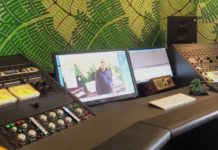











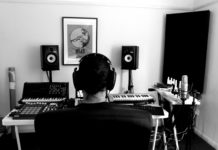







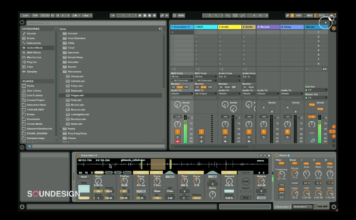



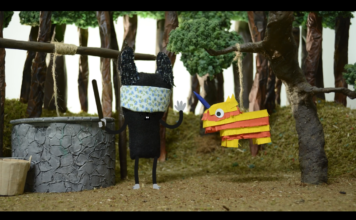

If you don’t like happy-ending stories maybe now it’s the time to change your mind. A guy from a small town in Colombia fell in love with Sound, left the traditional school and decided to use the web as a tool to educate himself and then create a place called Designing Sound, a passionate blog devoted to the world of sound design for visual media.
The name of this guy is Miguel Isaza and he is the perfect man for this crazy era: he knows how to spread a tweet and write a good blog title, believes to the promotion of a world wide community for sharing experiences or ideas, and, last but not least, he aspires to be a sound designer…can you ask for more?
We wanted to interview Miguel for a long time but today is the right day, because together with a bunch of other Sound super heroes he launched Sonic Terrain, a brand new project dedicated to the world of field recordings. Here we go…
Maybe one of the most important trend for the community of Sound this year is the phenomenon of the distribution of high quality audio contents via the Internet. We came to a new stage of evolution, starting from the well-known platforms SoundCloud and SoundSnap and going to projects like Tim Preeble’s HISS and a ROAR, Frank Bry’s The recordist, Chuck Russom FX and others (for a great list read: Independent SFX Libraries by Designing Sound).
Today we introduce Haptic Audio, a new project dedicated to provide royalty-free audio samples, kits, and instruments in (multi-format) 24 bit audio, founded by Jeremy Goldstein and Patrick Campbell, two sound designers and traditional musicians who decided to release their creative output using the web as the preferred platform of distribution.
We interviewed Jeremy and Patrick to know something more about this new project (you can watch the amazing video excerpt below), which recently created its SoundCloud channel and released the brand new Haptic04 libray on the Twisted Tools platform.
Some days ago we came back from Interferenze new arts festival in Italy, where we were invited to present Design o’the times, a panel/performance based on the concept of Time Design promoted by Albert Mayr.
We thank a lot all the people who were involved in this project, they were amazing, we will call’em our Friends of Sound, because they are contributing to create a brand new community of professionals, artists, researchers and musicians working in the field of sound and audio design.
A small video abstract of the performance is shown below.
The contributions of the first part of the panel where created based upon an abstract of the work of Mayr we sent by e-mail. At the end we asked:
What if you were asked to virtually participate in this collective creative effort to musically re-design time? How would you interpret your given one-hot-minute?
If you have someone in love living in Italy you know that we’re famous not only for pizza or mandolino (nice tool for the experimental sound designer…), but also because we got heart. Yes, we have a big heart. And some events can be organized only by people with a lot of heart. Like this festival.
Interferenze is an event dedicated to art and new technologies that will held in Italy from 23th to 25th July 2010. The location of this edition is the town of Bisaccia, placed along the eastern slopes of the hills of Irpinia. For three days this will be the place in which international artists, musicians, curators and researchers will meet together and give their contributions for workshops, concerts, live performances and installations.
We’ll be part of this big family, because I, Sara and Luigi Mastrandrea will lead a panel/workshop on Saturday 24th July called Design o’ the times, based on the concept of Time Design promoted by Albert Mayr.
Finally, we had a very deep and interesting digital conversation with Leandro Pisano, curator, writer and director of the festival, to know more about this amazing event in which Sound has inevitably a predominant role.
We’re very interested in sound design for everyday objects. Mr. Donald Norman should be very happy about this, we’re sure. But this the digital era and then maybe the object we’re using mostly during our day is called Max for Live, Logic or Ocarina. In few words: software.
Now the spanish agency Herraiz Soto & Co comes up with this idea: a software called Ommwriter, a very simple text editor which helps the user to focus his attention, removing external distractions and improving the creative process.
Some bloggers are calling it Zen software, we would like to propose a new name: emotional software. If you download Ommmwriter (free but only Mac now, sorry…) you coud realize that one of the most important feature is the selection of the soundtrack. And this explains our interest…
We wanted to know more about this project and then we reached for Julian Watts from Herraiz Soto & Co and David Ummmo, the music composer behind the sound of the software.
We just posted about Sonic Interaction Design and the importance of the COST Action IC0601 on SID for the development of this new discipline, which is gaining a relevant role in the world of sound design.
Some members of the SID Action and the Design Factory of the Aalto University organized the Product Sound Design Summer School in August 23-26 2010, at Espoo, Finland, with the aim to educate the future product design and development team members with a specific competence on interactive sound.
We interviewed Stefano Delle Monache, one of the organizers, to better know issues and objectives of the course.
Johan Primero and the Citroën 2CV at the FC Walvisch studios. Photo by Marcel Bultman
We’re living very strange days: sound professionals are very tough people, they know their work sometimes could be very hard, like recording sound underwater, following crazy seals vocals or jumping inside a very very noisy car.
Everything starts with Johan Primero, Johan Kramer‘s new movie, an extraordinary story of love and devotion to the world of football. In few words: Johan Puig is a 42 years-old man who drives his car 50 times a day around the stadium of FC Barcelona, in order to bring luck to his loved spanish club. And what a big surprise: Johan’s home is the sexy & vintage Citroën 2CV.
The entire movie is based on the relationship between the actors and the car, so we can imagine what kind of problems were born when designing the whole soundscape. The solution was around the corner: to bring the car to the recording studio!
Johan Kramer and his assistant Andreas Pasvantis decided to make a short film about this extraordinary situation, to document the great work of sound design made for the movie. The video was directed, filmed and edited by Andreas himself.
The company which accepted this challenge is FC Walvisch, a sound studio of Amsterdam (The Netherlands), specialized in making sound and music for commercials, films, music videos, games and online media.
It will be one of the most critical issues for the automotive industry in the next three years: the sound of electric cars (EV) and hybrids (HEV). If you own a car, a motorcycle or a spaceship, it’s impossible that you never heard about the friendly Nissan LEAF, the sexy Fisker Karma or the worldwide well-known Toyota Prius. These will be the cars of our future, a new industrial mashup made of design, innovation and green technology.
This is surely nice, but electric and hybrid vehicles have a huge problem: they’re quiet. Too quiet. A conventional combustion-engine vehicle when stationery emits a sound of 50 dB, while the noise generated by an electric one is 0 dB. At a speed of 12 km/hr the conventional car is at 60 dB, the electric car is at 50 dB. When moving at a speed bigger than 20 km/hr, the intensity of the emitted sound is the same for all the vehicles, due to the friction with the ground. The reduced sound signature of hybrid and electric cars introduce a safety concern to cyclists and pedestrians, because they hardly detect vehicles at low speeds. This problem becomes more dramatic for blind and visually impaired pedestrians, who use auditory informations, like noise generated by vehicles, to localize streets, crossroads and make decisions in order to move safely.
I and Sara are working in Lorelei with FIAMM, world leader in the market of acoustic devices, for the development of a solution to the problem of quiet electric cars. Our mission: to guarantee the safety on the roads, but not only…
Andrew Hinton on the stage of IV IA Summit, Pisa, Italy. Photo by Andrea Resmini.
The IA Summit is one of the most important italian events dedicated to the themes of Information Architecture, User Experience and Information Design. The 4th edition of the summit took place in Pisa on 7-8th May 2010 and was organized by Dario Betti, Andrea Resmini, Alberto Mucignat and Luca Rosati. Among the speakers of this year we can remember professionals and researchers from many fields of the IA, like: Andrew Hinton, Jason Hobbs and Federico Fasce.
I and Sara were invited to present Sketching in Audio Design, a paper describing some techniques and methodologies of sound & audio design we are experimenting with Lorelei in a project for the english studio Architects of Air. It was very interesting, because we compared our sound-oriented approach with the traditional way of thinking of user experience designers and information architects, more used to deal with textual information than audio samples. We had a lot of fun and we also won the prize for the best presentation of the summit. We want to thank all the people who appreciated and voted this work. Below there are the slides of our presentation, the video is coming, so stay tuned on this post.
If you ask yourself what new recorder to buy or if you are the only sound designer in the world being offered to work for free, now you know you’ve got to check out Social Sound Design, the new project of the sound designer – and of course the author of one of the best and most well-known blog {sound+design} – Andrew Spitz.
Andrew Spitz
Yes, he’s the guy of Tweet A Sound and The Telephone Game. We looked for him to get a bit deeper on the birth and evolution of Social Sound Design, and – why not – to investigate his point of view on our favorite subject, sound design.
Gianpaolo D'Amico and Sara Lenzi. Photo by Nunzio Talamo.
If you still don’t know Everyday Listening now it’s the right time. Hugo Verweij is the creator of this wonderful blog dealing with art, inspiration and creativity in the field of music and sound.
What sound from your childhood made the most impression on you?
How do you listen to the world around you?
Which place in the world do you favor for its sound?
How could we make sound improve our lives?
What sound would you like to wake up to?
Now the time has come. Hugo sent us his invitation to partecipate, then I and Sara put our head on the floor with our usual headphones and asked our friend Nunzio Talamo to shoot some photo. We had a lot of fun and then we got inspired for the sound answers too: this is our personal contribution to the 5 questions series.